July 26, 2026

Many construction companies believe that having a modern-looking website is enough to attract new business. They invest in professional photography, polished branding, and digital marketing campaigns, yet they still struggle to generate consistent inquiries.
The issue usually isn't a lack of traffic.
It's a lack of user experience strategy.
A visitor may arrive through Google after searching for Construction Website Design, Home Builder Website Design, or Construction Company Website, but within a few seconds they decide whether your business appears trustworthy enough to contact.
That decision happens long before they compare prices.
Before they read your company history.
Before they request a quote.
Before they even scroll halfway down the homepage.
Today's customers expect far more than an attractive interface. They expect a website that answers questions quickly, demonstrates expertise, reduces uncertainty, and guides them naturally toward taking action.
In other words, they expect a website designed around people—not pages.
This is where UI/UX Design, Customer Experience (CX), Information Architecture, Responsive Website Design, and Website Conversion Optimization become powerful business tools instead of design trends.
Whether you're a home builder, general contractor, architecture firm, or real estate developer, your website has one primary responsibility:
Turn trust into inquiries.
This article explores the UX principles behind successful Construction Website Design, explaining why they work, how they influence customer behavior, and how businesses can create digital experiences that convert more visitors into qualified leads.
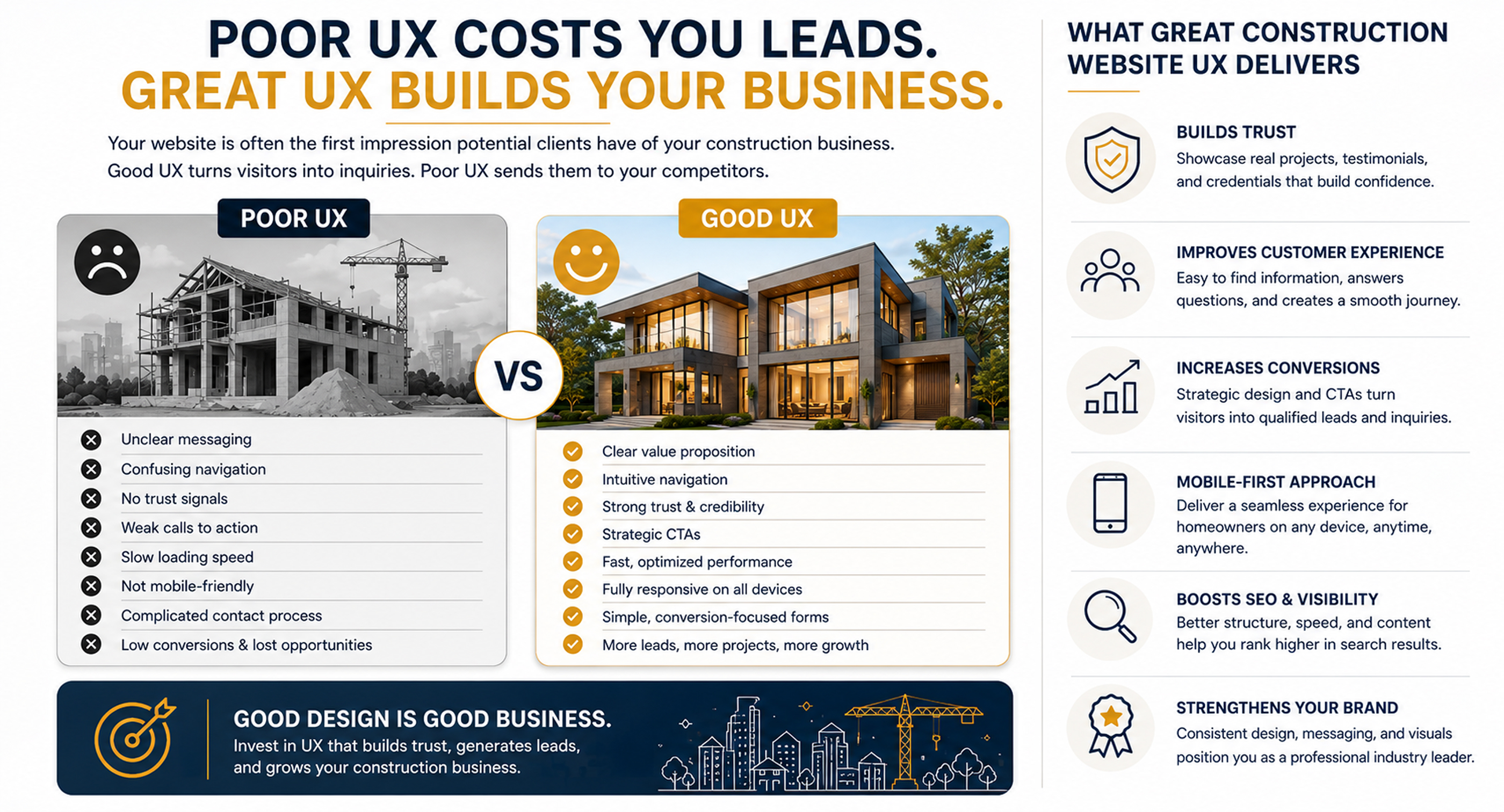
Years ago, customers visited offices before making purchasing decisions.
Today they visit websites.
For most construction businesses, the website has become the first meeting between the company and a potential client.
That first impression carries enormous weight because construction projects involve significant financial investment.
Whether someone plans to build a custom home, renovate a kitchen, develop commercial property, or hire a design-build firm, they're looking for reassurance before they spend money.
Visitors ask themselves questions like:
A well-designed Construction Company Website answers those questions almost immediately.
A poorly designed one creates hesitation.
Construction is a high-risk purchase.
Unlike buying everyday products, customers cannot easily undo their decision after hiring a contractor.
This makes trust the most valuable asset a website can build.
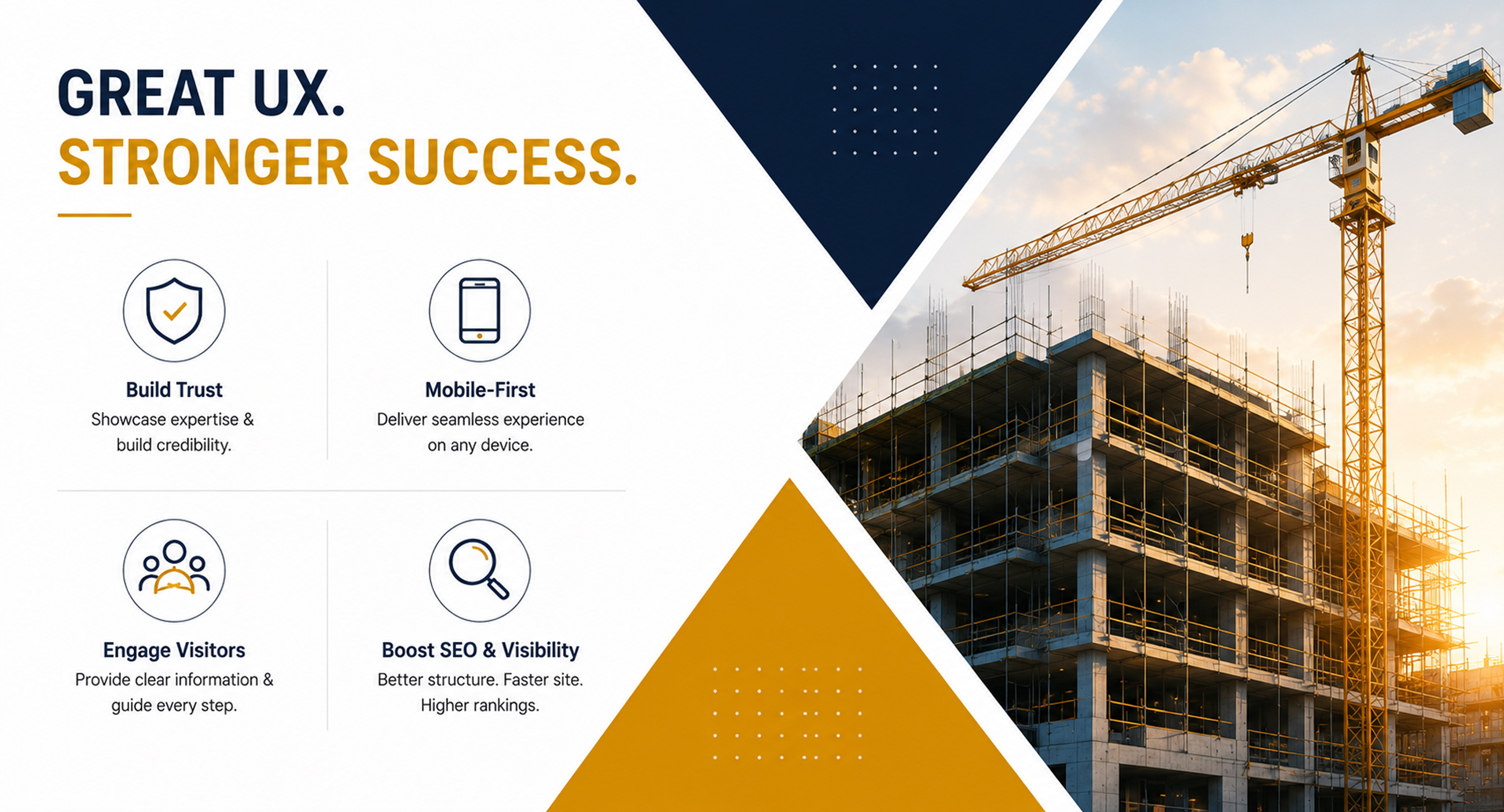
Great UX reduces perceived risk by making information clear, accessible, and easy to understand.
Instead of forcing visitors to search for answers, an effective website anticipates their questions and presents information logically.
This includes:
When users don't have to work to find answers, they naturally feel more confident in the business.
Businesses often invest heavily in:
These channels generate traffic.
But traffic alone doesn't produce revenue.
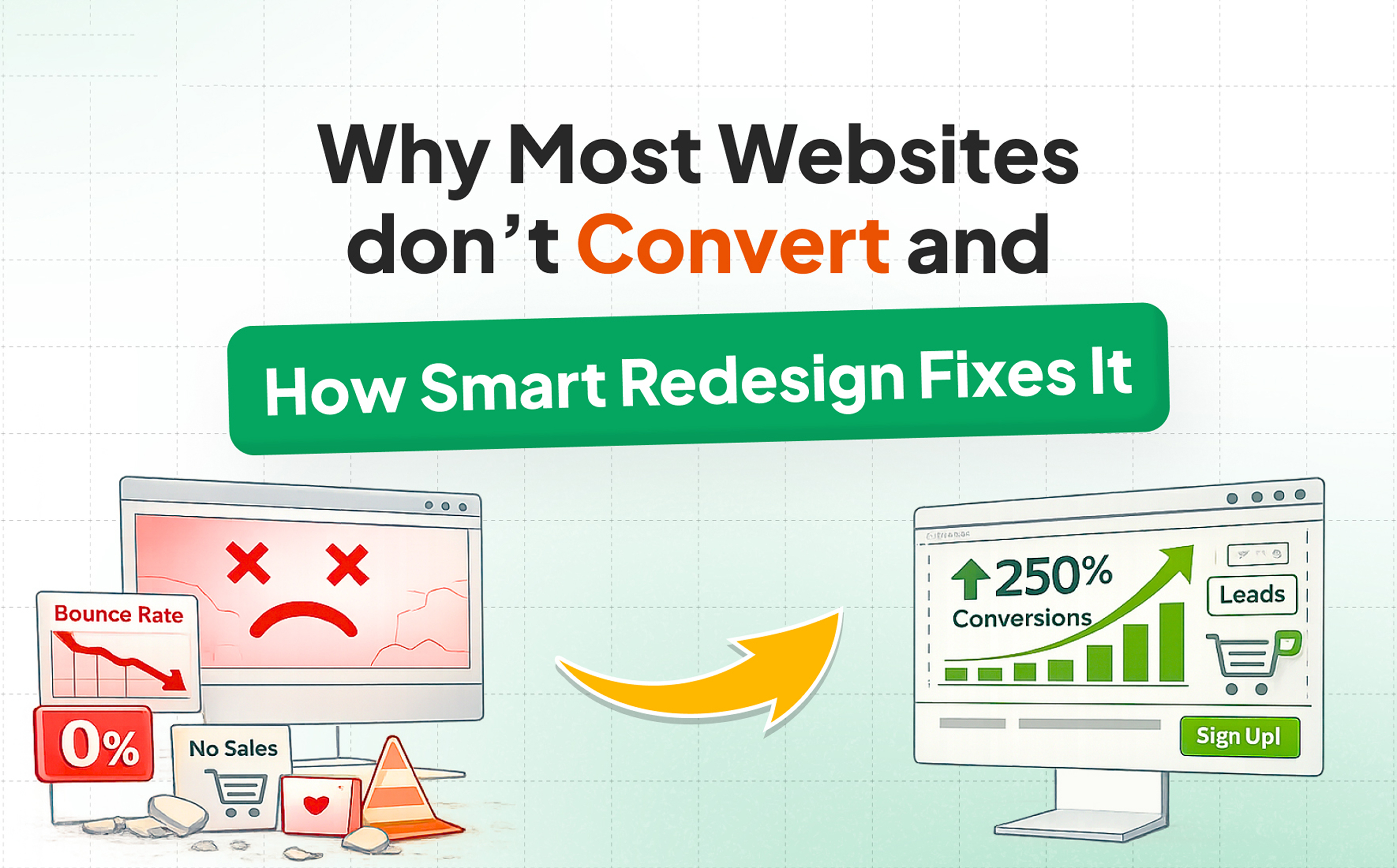
Imagine attracting 10,000 monthly visitors through SEO while only 1% request a consultation.
Now imagine improving the website's user experience so that 3% convert instead.
Without increasing advertising spend, lead generation triples.
That's why Website Conversion Optimization often produces a better return on investment than simply buying more traffic.
A high-performing website amplifies every marketing effort.
Many businesses think customer experience starts after someone becomes a client.
In reality, it starts the moment someone lands on your homepage.
Visitors immediately evaluate:
These signals shape emotional responses before visitors consciously analyze the content.
An intuitive website communicates professionalism.
A confusing website creates doubt.
Construction projects involve both emotional and rational decision-making.
Homeowners imagine living in a finished space.
Developers evaluate investment opportunities.
Business owners calculate return on investment.
Successful Home Builder Website Design speaks to both sides of the decision.
Emotion is created through:
Logic is supported by:
Combining both creates stronger purchasing confidence.
Many construction companies underestimate how much poor UX affects revenue.
An outdated website doesn't simply look old.
It silently loses business every day.
Common consequences include:
Most visitors never explain why they leave.
They simply choose another contractor whose website feels easier to trust.
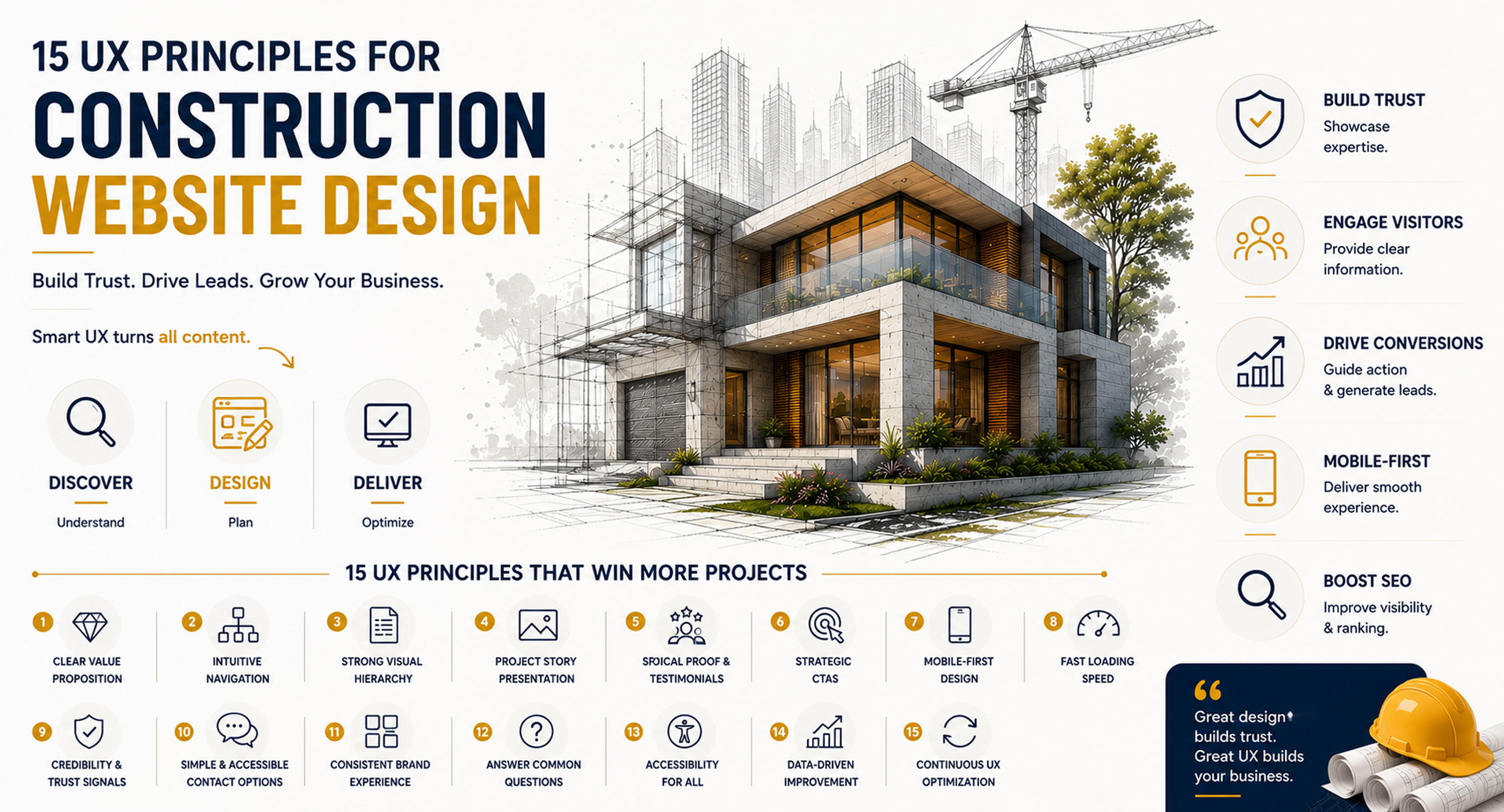
Headlines like "Welcome to Our Website" or "Quality Construction Services" fail to communicate value.
Visitors should immediately understand:
Specific messaging always outperforms vague statements.
When service pages, project galleries, testimonials, and contact information are scattered randomly, visitors become overwhelmed.
Information Architecture organizes content according to user expectations instead of internal company structure.
Good architecture reduces mental effort.
Every page should guide the eye naturally.
Without clear hierarchy, visitors don't know where to focus.
Effective hierarchy uses:
These elements help users scan quickly.
Construction companies often display projects without context.
Instead of showing only photos, explain:
Storytelling makes projects more persuasive than galleries alone.
Visitors should never wonder what happens next.
Strong CTAs include:
Every major page should include at least one clear primary action.
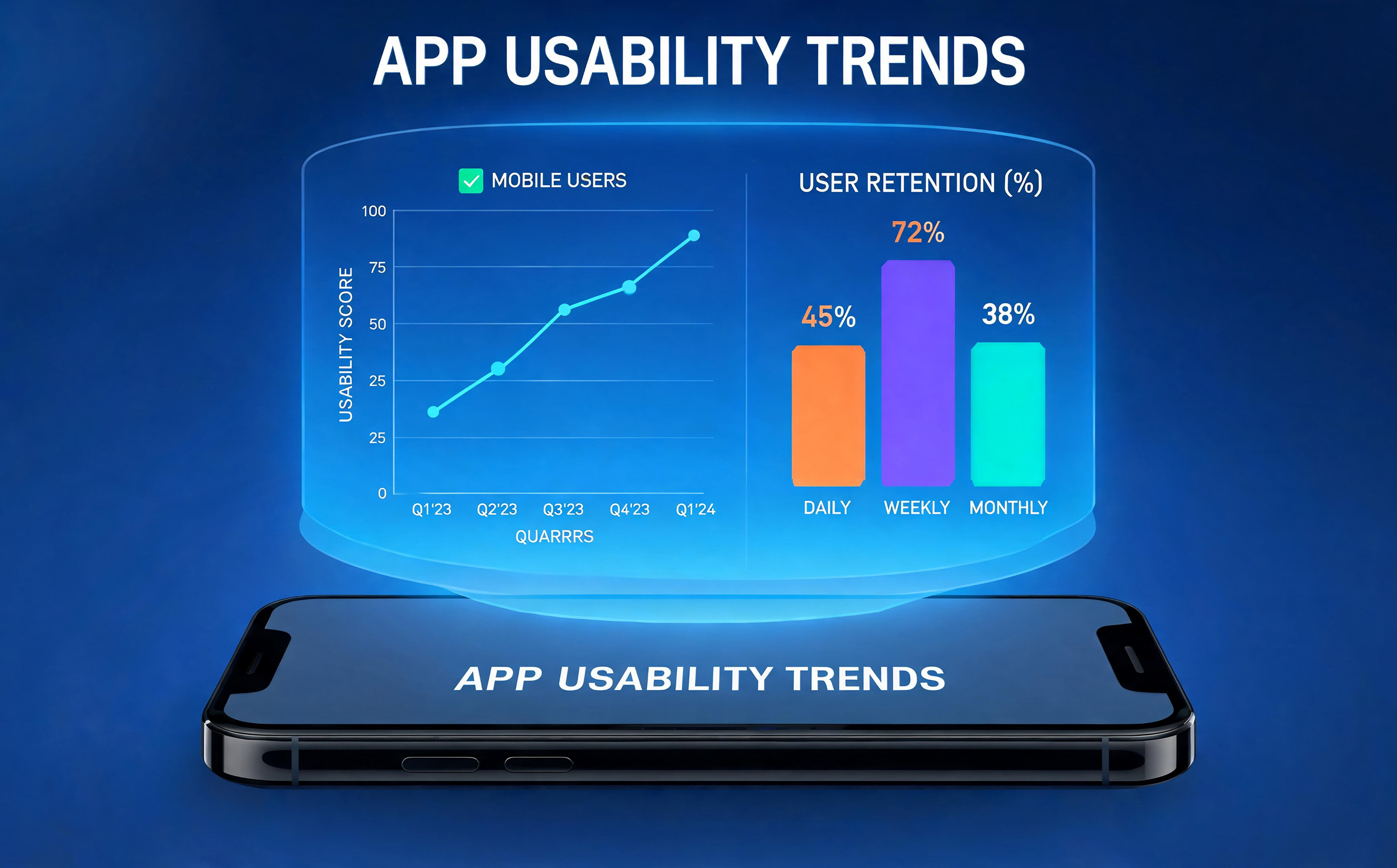
More than half of website traffic now comes from mobile devices.
If users struggle to navigate your site on a phone, they're unlikely to contact you.
Responsive Website Design is no longer optional.
It's a business requirement.
People trust people.
Include:
These elements reduce perceived risk.
Website speed directly affects:
Optimizing images, reducing unnecessary scripts, and improving Core Web Vitals create a noticeably better user experience.
Every extra field reduces completion rates.
Ask only for information needed to start a conversation.
Simple forms generate more inquiries.
The biggest mistake is focusing on:
"Here's who we are."
Instead of:
"Here's how we solve your problem."
The most successful Construction Business Websites center every design decision around customer goals, questions, concerns, and desired outcomes.
When visitors feel understood, they're much more likely to become clients.