July 6, 2026
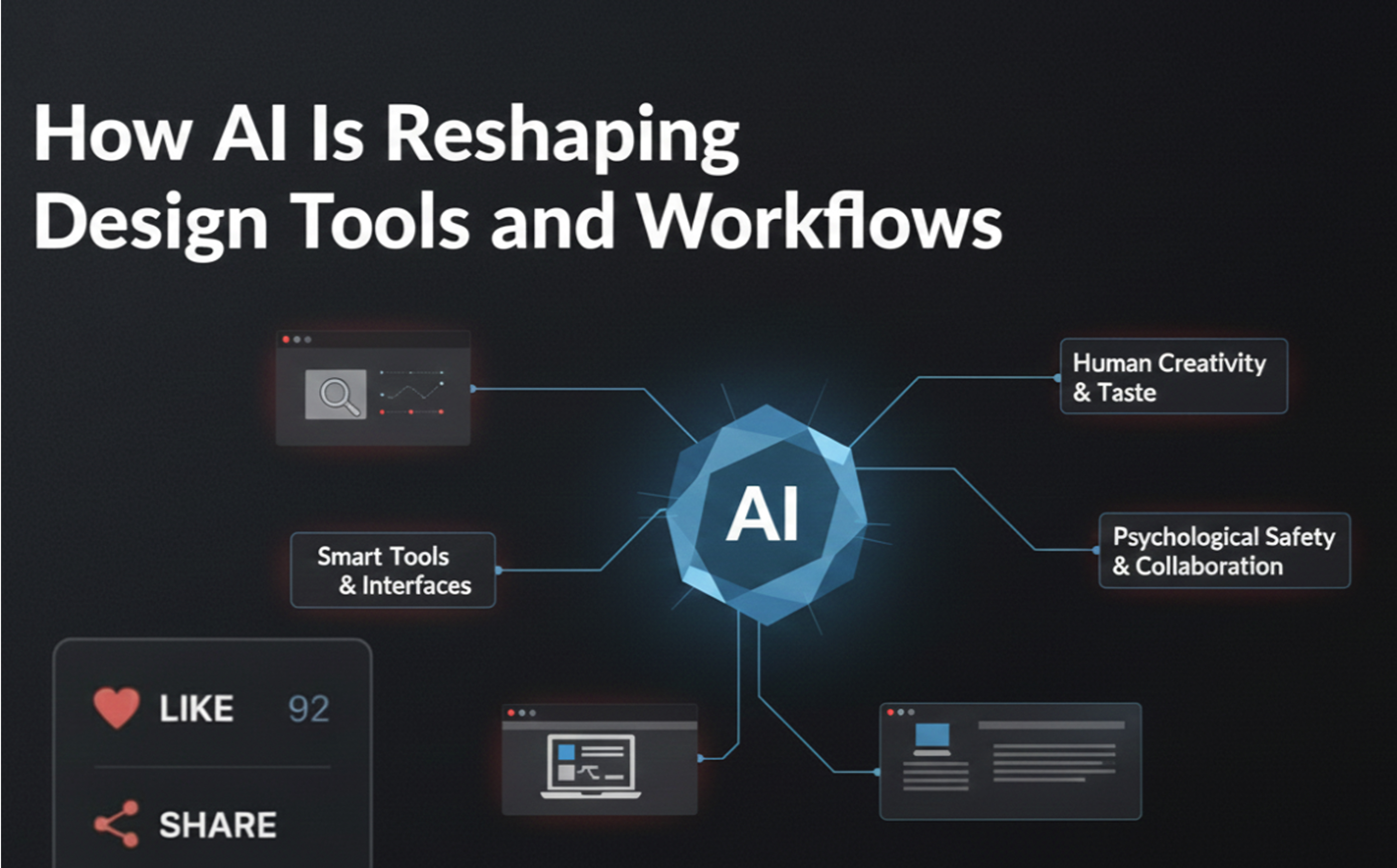
Artificial Intelligence (AI) is rapidly transforming the way digital products are researched, designed, tested, and optimized. What once required days of manual effort can now be completed in hours through AI-assisted workflows.
From user research and ideation to wireframing, prototyping, content generation, and design operations, AI is becoming an increasingly valuable tool for product teams. Rather than replacing designers, AI is augmenting their capabilities by automating repetitive tasks and accelerating decision-making.
This article explores how AI is reshaping product design workflows, examines emerging opportunities and challenges, and highlights the evolving role of designers in an AI-powered future.
AI in design refers to systems capable of assisting or automating tasks traditionally performed by humans.
Content generation
Design suggestions
User research analysis
Layout generation
Image creation
Usability insights
These tools help teams work faster while maintaining quality and consistency.
Research is one of the most time-consuming aspects of product design.
Interview transcripts
Survey responses
User feedback
Session recordings
AI tools can significantly reduce this workload.
One of the most visible applications of AI is automated wireframe generation.
Designers can now describe a product using natural language and receive interface concepts within seconds.

Artificial Intelligence is transforming product design workflows at an unprecedented pace. From research and ideation to prototyping and design operations, AI is helping teams work faster, explore more possibilities, and reduce repetitive effort.
However, the future of product design is not about humans versus AI. It is about humans and AI working together.
The most successful organizations will be those that combine AI's speed and efficiency with the creativity, empathy, and strategic thinking that only human designers can provide.
As AI continues to evolve, designers who embrace these tools thoughtfully will be better equipped to create innovative, user-centered products in an increasingly competitive digital landscape.